Basic Burmese Phrases Every Traveller Should Know
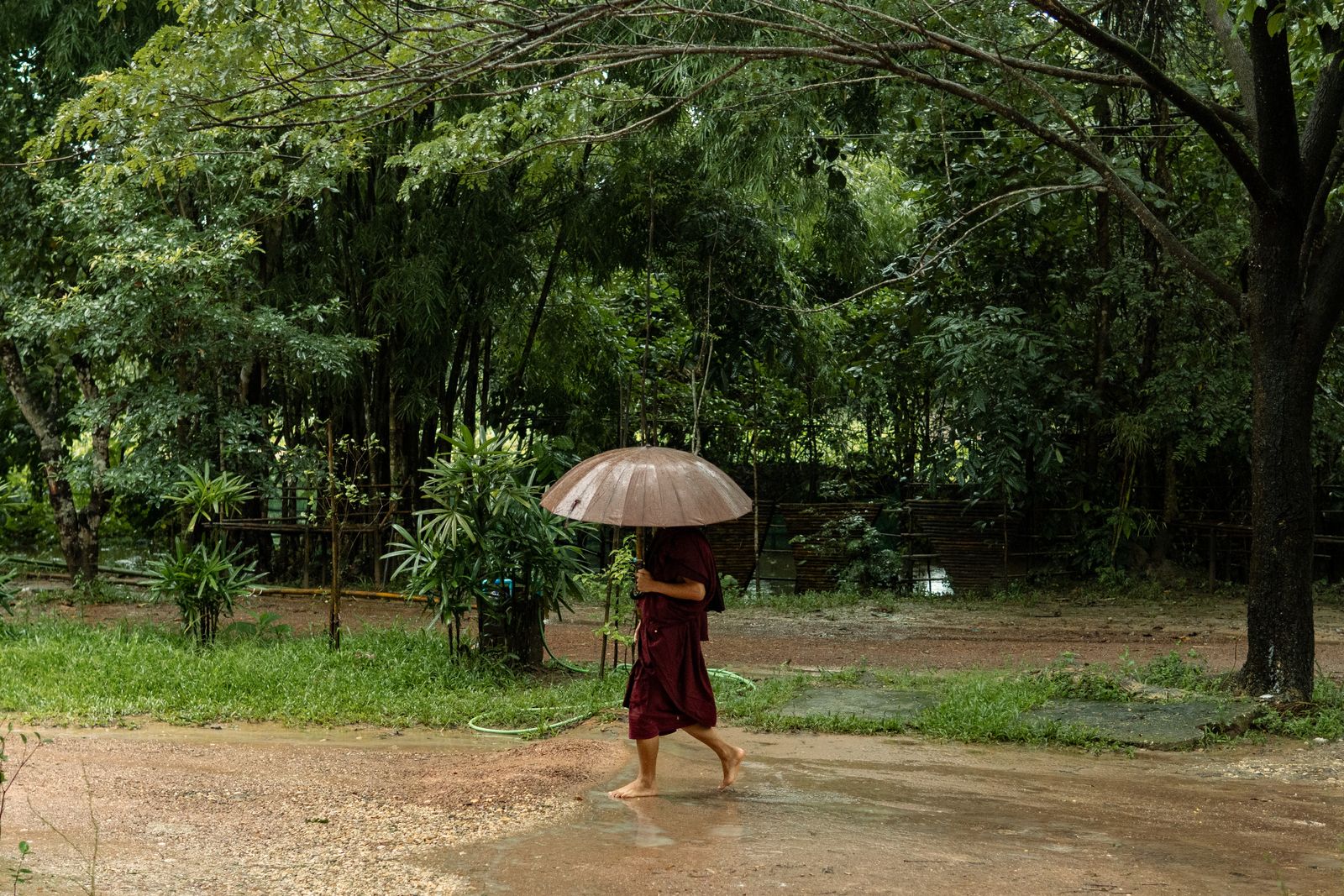
Photo: Shane Min Zaw (Pexels)
The burmese language is the official tongue of Myanmar and is spoken as a first language by the majority of the country’s population. It belongs to the Tibeto-Burman family and is tonal, which means pitch changes the meaning of a word — a challenge for English speakers, but one that rewards even modest effort. Locals throughout Myanmar genuinely appreciate travellers who try even a handful of basic burmese phrases, and a little goes a surprisingly long way when it comes to smiles, trust, and hospitality.
About the Burmese Language
Burmese (also called Myanmar language) uses its own script — a series of rounded letters derived from Mon and ultimately from ancient Brahmic scripts of South Asia. Each syllable is built from an initial consonant, a vowel, and sometimes a final consonant or tone marker. The script reads left to right and has no spaces between words, which makes reading signage challenging at first glance.
There are three tones in standard Burmese:
- Creaky (high and short) — produced with a tense throat
- Low (falling) — relaxed and drawn out
- High (clear) — rising, like a question in English
For practical travel purposes, you don’t need to master tones perfectly. Most Burmese speakers are patient with foreign accents, and context — pointing at a menu, gesturing at a map — helps enormously. Focus on getting the vowel sounds right and speak slowly.
Script vs. Romanisation
Myanmar’s road signs and most tourist-facing materials now include romanised text alongside Burmese script, but spellings vary — “Yangon” and “Rangoon” refer to the same city, and “Bagan” also appears as “Pagan.” Don’t let inconsistent transliteration worry you; most travellers navigate comfortably using romanised phonetic guides.
Burmese Phrasebook Table
The table below covers the categories most useful for independent travellers: greetings, numbers, directions, food, and emergencies. The pronunciation column uses plain English approximations — it won’t be perfect, but it will be understood.
Greetings & Everyday Phrases
| English | Burmese (romanised) | Pronunciation guide |
|---|---|---|
| Hello / How are you? | Mingalaba | ming-gah-LAH-bah |
| I’m fine, thank you | Cè-zu-tin-ba-deh | chay-zoo-TIN-bah-day |
| Thank you | Cè-zu-beh | chay-zoo-BAY |
| You’re welcome | Yar-ma-shi-ba-bù | yah-mah-SHI-bah-boo |
| Yes | Hoke-keh | hoke-KAY |
| No | Ma-hoke-bù | mah-hoke-BOO |
| Excuse me / Sorry | Swann-yaw-ba | swahn-YAW-bah |
| My name is … | Kyama nam-meh … ba | chyah-mah NAHM-may … bah |
| I don’t understand | Na-ma-leh-bù | nah-mah-LAY-boo |
| Do you speak English? | Ingalite sa-ga pyaw-tat-tha-la? | ing-glate SAH-gah pyaw-TAHT-thah-lah |
| Goodbye | Thwa-daw-meh | thwah-DAW-may |
Numbers
| Number | Burmese | Pronunciation |
|---|---|---|
| 1 | Tit | tit |
| 2 | Hnit | hnit |
| 3 | Thone | thone |
| 4 | Lay | lay |
| 5 | Nga | nga |
| 6 | Chauk | chowk |
| 7 | Khun-nit | khoon-NIT |
| 8 | Shit | shit |
| 9 | Ko | koh |
| 10 | Se | say |
| 100 | Ya | yah |
| 1,000 | Taung | towng |
Directions & Transport
| English | Burmese (romanised) | Pronunciation guide |
|---|---|---|
| Where is …? | … beh-hma-shi-dha-leh? | … bay-hmah-SHI-thah-lay |
| Left | Beh | bay |
| Right | Nya | nyah |
| Straight ahead | Shout-kyaung | shote-CHOWNG |
| Near / Close | Nee-deh | NEE-day |
| Far | Wei-deh | WAY-day |
| Bus station | Bas-ka-youn | BUS-kah-yown |
| Train station | Bada-tha-na | BAH-dah-thah-nah |
| Airport | Lei-zin | LAY-zin |
| How much (for the taxi)? | Beh-lauk-leh? | bay-LOWK-lay |
| Stop here | Di-hma-yit-ba | dee-hmah-YIT-bah |
Food & Drink
| English | Burmese (romanised) | Pronunciation guide |
|---|---|---|
| I am hungry | Batha-kin-deh | bah-thah-KIN-day |
| Water | Yey | yay |
| Rice | Htamin | htah-MIN |
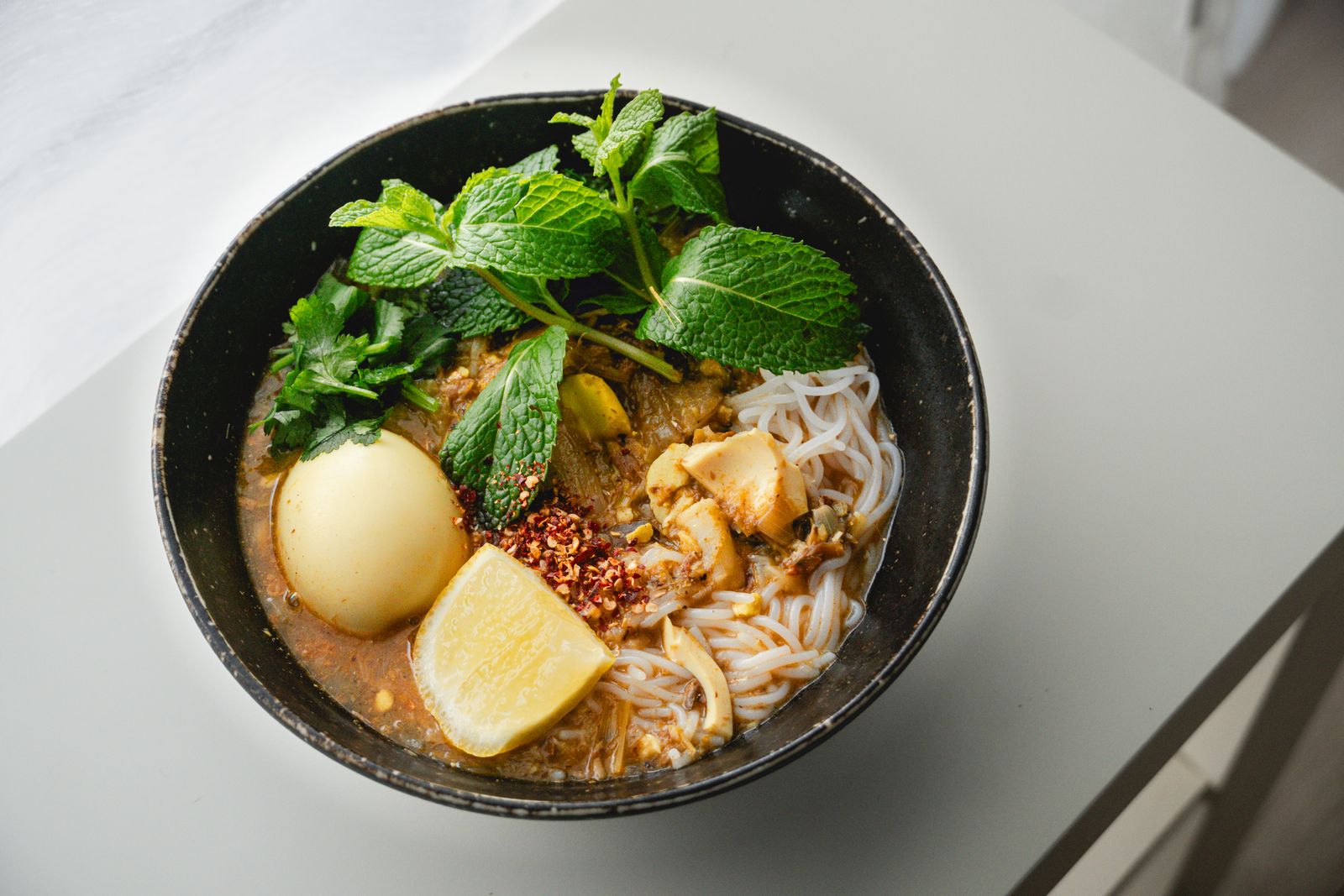
| Noodles | Khauk-swe | khow-SWAY |
| Vegetables | Hin-thi hin-ywet | hin-thi hin-YWET |
| Meat | A-tha | ah-THAH |
| Chicken | Jet-tha | jet-THAH |
| Fish | Nga | nga |
| Spicy | Sat-leh | SAT-lay |
| Not spicy please | Sat-ma-leh-ba-neh | sat-mah-LAY-bah-nay |
| Delicious | A-yin-mhan-deh | ah-yin-MAHN-day |
| The bill please | Ein-goun-beh | ayn-GOWN-bay |
| Tea | La-phet-yey | lah-PAY-yay |
Emergencies
| English | Burmese (romanised) | Pronunciation guide |
|---|---|---|
| Help! | Ko-pyaw-ba! | koh-PYAW-bah |
| I need a doctor | Hsay-wun loh-ah-leh | hsay-WUN loh-ah-LAY |
| Hospital | Hsay-youn | HSAY-yown |
| Police | Yeh-sah | YAY-sah |
| Thief! | Thuh-ko! | thuh-KOH |
| I am lost | Lann-yout-neh-deh | lahn-YOTE-nay-day |
| Call an ambulance | Ambulance sar-khan-ba | am-byu-LENTS sah-KHAHN-bah |
Pronunciation Tips for Burmese
Tone matters, but context saves you. Burmese has three tones, but most critical travel phrases are understood even with imperfect tones. Focus on vowel length and clarity.
The “hm” and “hn” sounds. Burmese uses consonant clusters like hm (as in hmah — place) and hn (as in hnit — two). These are pronounced as a single breathy sound, not two separate consonants. Relax the throat and let the air lead.
“Kyah” vs “Chah”. The initial ky cluster (as in kyama, the word for “I”) sounds close to the English ch in “chair” but slightly softer. Burmese speakers will understand either.
End particles signal politeness. Notice that many phrases end in -ba or -deh. The -ba suffix is a politeness marker — similar to adding “please” or “sir/madam” to a sentence. Using it makes your attempts sound more respectful, even if the rest of the phrase is shaky.
Learn “Mingalaba” first. This greeting-blessing is universally used, unmistakable, and always warmly received. If you learn one thing before arriving, make it this.
A Note on the Burmese Script
You won’t read menus or signs in Burmese script without dedicated study, but recognising a few key characters can help. The script is circular and flowing. Learning to spot the word for “hotel” (ဟိုတယ်) or “restaurant” (စားသောက်ဆိုင်) in script — even approximately — can help you navigate market signs and notice relevant establishments.
Several free apps (such as those teaching Burmese as a foreign language) include audio pronunciation, which is far more valuable than a printed guide for tonal languages. Spending even an hour with audio before departure will sharpen your Mingalaba considerably.
Cultural Context: Language and Respect
Myanmar is a deeply relationship-oriented culture. Making an effort with the burmese language, however clumsy, signals respect for the country and its people. A few practical notes:
- Address older people as U (Mr./Uncle) or Daw (Ma’am/Aunt) — these are respectful prefixes used before names.
- Monks are addressed as Ashin or Phongyi and should be greeted with a slight bow. Never address a monk casually.
- Avoid raising your voice when frustrated — it reads as aggression and will close doors rather than open them.
- Smiling while attempting Burmese is understood everywhere as good faith.
For more on how to show cultural respect during your stay, see our guide to the Myanmar longyi — the traditional garment worn across the country and expected at religious sites — and our overview of Myanmar festivals where language and custom intersect.
If you’re planning where to go during your trip, our Myanmar itinerary guide covers suggested routes, and the things to do in Myanmar article walks through the top experiences region by region.
Travelling independently across Myanmar? Compare buses, trains & boats on 12Go Asia
FAQ
How do you say hello in Burmese?
The standard greeting in Burmese is Mingalaba (မင်္ဂလာပါ), pronounced ming-gah-LAH-bah. It literally means something close to “auspiciousness to you” and functions as a general all-purpose greeting suitable at any time of day and with any person.
Is Burmese a difficult language to learn?
Burmese is considered challenging for English speakers, primarily because of its tonal system and its unique script. However, acquiring enough basic burmese phrases for practical travel is achievable in a short time. The grammar is relatively straightforward — there are no verb conjugations for person or tense in the way English has — and Burmese speakers are consistently patient with foreign learners.
What language is spoken in Myanmar besides Burmese?
Myanmar is linguistically diverse. While Burmese is the official language and is spoken or understood by most of the population, the country is home to well over a hundred ethnic languages and dialects. Shan, Karen, Kachin, Mon, Rakhine, and Chin are among the most widely spoken minority languages. In many tourist areas, especially Yangon and Bagan, a working knowledge of English is common among those in the hospitality industry.
Does Burmese use a different alphabet?
Yes. Burmese uses its own script, derived from ancient Brahmic writing systems of South Asia. The letters are characterised by rounded, circular forms. The script is written left to right without spaces between words, and includes tone markers and vowel diacritics. Most tourist-facing signs in Myanmar also include romanised text, so travellers are not dependent on reading Burmese script.
Are burmese words similar to Thai or other Southeast Asian languages?
Burmese belongs to the Tibeto-Burman language family and is not closely related to Thai, Vietnamese, or Khmer, which belong to different families. However, Burmese has borrowed vocabulary from Pali (the language of Theravada Buddhist scripture), Sanskrit, and more recently English. Words like ambulance and bus are recognisable in Burmese speech.