15 Myanmar Dishes You Have to Try
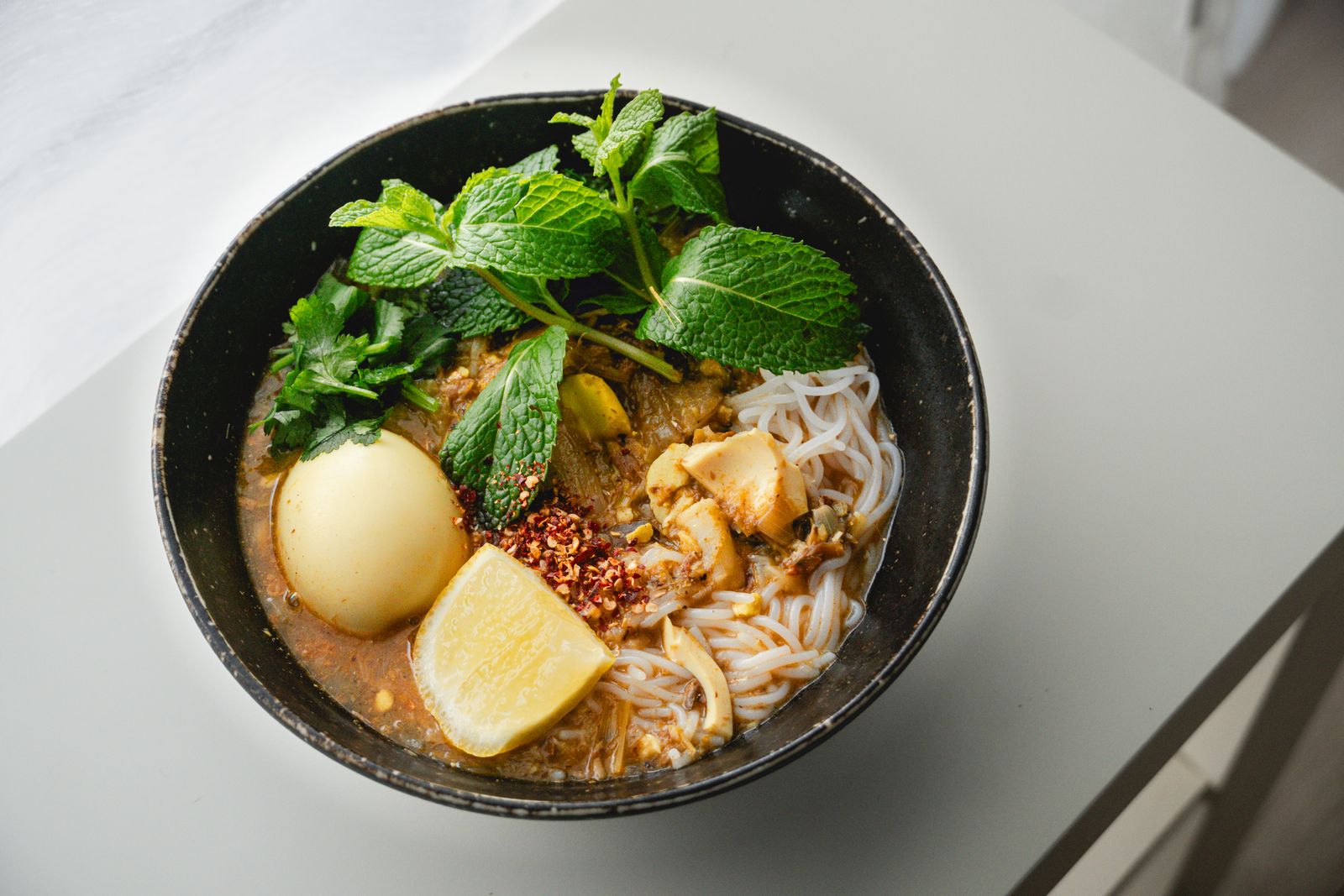
Photo: Su La Pyae (Pexels)
Myanmar food is one of Southeast Asia’s best-kept culinary secrets: deeply flavored, surprisingly varied, and rooted in centuries of trade between India, China, and the inland kingdoms of the Irrawaddy valley. Whether you are sitting down at a street stall in Yangon or a teahouse in Mandalay, you will find dishes that are unlike anything else in the region. Below are 15 iconic myanmar dishes every visitor should seek out, along with a brief description of what each one is and where it tends to appear.
1. Mohinga — The National Dish of Myanmar Food
Mohinga is a fish-based noodle soup eaten primarily at breakfast. A rich broth made from catfish, lemongrass, ginger, and toasted chickpea flour is poured over thin rice noodles and topped with crispy fritters, boiled eggs, banana-stem slices, and a squeeze of lime. It is the closest thing Myanmar has to a national dish.
Where to try it: Street stalls open before dawn all over Yangon. The Bogyoke Aung San Market area has reliable vendors.
2. Laphet Thoke — Tea-Leaf Salad
Laphet thoke (fermented tea-leaf salad) is arguably the dish that defines burmese food culture. Fermented green tea leaves are tossed with toasted sesame seeds, fried garlic, roasted peanuts, dried shrimp, tomatoes, and lime juice. The result is a complex interplay of sour, bitter, crunchy, and umami flavors.
Where to try it: Almost every Burmese restaurant serves it. In Yangon, look for it as a starter or a snack alongside green tea at teahouses.
3. Shan Noodles (Shan Khao Swè)
Originating in Shan State, these flat rice noodles come in a light tomato-and-sesame broth, topped with minced pork or chicken and pickled greens. The flavors are more delicate than mohinga — a good introduction to what to eat in myanmar if you prefer milder profiles.
Where to try it: Shan noodle shops in Inle Lake villages, Kalaw, and the dedicated Shan restaurants in Yangon’s downtown.
4. Ohn No Khao Swè — Coconut Noodle Soup
Often compared to Malaysian laksa, ohn no khao swè is egg noodles served in a creamy coconut-milk and chicken broth, enriched with chickpea flour. Garnishes typically include fried onions, boiled eggs, chili flakes, and a wedge of lime.
Where to try it: Common in Mandalay teahouses and central Myanmar; also available across Yangon.
5. Mont Di (Mandalay-Style Noodles)
Mont di are thin rice noodles served dry with a thick fish sauce, often accompanied by a light soup on the side. The dish is topped with crispy garlic and fresh herbs. It is the Mandalay equivalent of mohinga and is eaten throughout the morning.
Where to try it: Mandalay street stalls, particularly around Zegyo Market.
6. Nan Gyi Thoke — Thick Noodle Salad
Nan gyi thoke uses thick round rice noodles tossed in a chicken curry sauce and dressed with fish sauce, lime, sliced banana blossoms, and crunchy split peas. It is drier and more salad-like than the broth-based dishes above.
Where to try it: Teahouses and noodle shops throughout central Myanmar and Yangon.
7. Pazun Kyaw — Prawn Fritters
Golden, crispy prawn fritters made with fresh shrimp coated in a light chickpea batter and deep-fried. They are commonly eaten as a side with mohinga or served as a street snack. Freshwater-prawn versions are especially good near the Irrawaddy delta.
Where to try it: Street food stalls in Yangon and the Ayeyarwady region.
8. Htamin Gyaw — Burmese Fried Rice
Myanmar’s take on fried rice uses day-old jasmine rice stir-fried with shrimp paste (ngapi), onions, and whatever protein is on hand — eggs, shrimp, or chicken. The distinctive salty depth comes entirely from the shrimp paste rather than soy sauce.
Where to try it: Home kitchens, local eateries, and market canteens everywhere.
9. Curry (Si Byan)
Burmese curries (si byan, literally “oil-return”) are distinguished by a long, slow cooking process that reduces tomatoes and onions into a dark, fragrant base with visible oil floating on top — a sign the dish is fully cooked. Pork, chicken, mutton, and fish versions are all common, served with rice and a side of raw vegetables.
Where to try it: Any Burmese restaurant. Curry houses in Yangon’s downtown serve all-you-can-eat sets with multiple proteins.
10. Ngapi Kyaw — Fried Shrimp Paste
A condiment as much as a dish, ngapi kyaw is shrimp paste mixed with dried chilis, garlic, and onion, then fried into a pungent, salty relish. It accompanies virtually every Burmese rice meal and is one of the defining flavors of myanmar food.
Where to try it: On the table at almost any local rice restaurant.
11. Samosa Thoke — Samosa Salad
Influenced by South Asian cooking that traveled with Indian traders, samosa thoke breaks fried samosa pastry into pieces and tosses them with chickpeas, potatoes, tamarind sauce, and chili. It is a popular afternoon snack sold at market stalls.
Where to try it: Markets in Yangon (notably Bogyoke) and Mandalay, especially in the afternoon.
12. Palata — Flaky Flatbread
Palata is the Burmese version of the South Asian paratha: a layered, flaky flatbread cooked on a griddle with oil. It is eaten for breakfast or as a snack, dipped in curry or sweetened condensed milk. Tea shops across the country serve it from early morning.
Where to try it: Any Burmese teahouse. Yangon’s Indian Quarter near Sule Pagoda has excellent versions.
13. Mont Lone Yay Paw — Sweet Rice Balls
A traditional festive snack, these small glutinous rice balls are filled with palm sugar and served in a warm ginger syrup. They appear year-round but are most closely associated with the Thingyan water festival period. See our Myanmar festivals calendar for when to look for seasonal street food.
Where to try it: Festival stalls, teahouses, and street vendors selling traditional Myanmar sweets.
14. Kyay Oh — Pork Offal Noodle Soup
Kyay oh is a Chinese-influenced noodle soup popular in Yangon and along the trade routes. A clear pork broth is loaded with glass noodles, pork offal, meatballs, and blood tofu, finished with garlic oil and white pepper. It is typically eaten as a late-night dish.
Where to try it: Night markets in Yangon, particularly around Chinatown (Latha Township).
15. Shwe Yin Aye — Coconut and Agar Dessert Drink
To finish, shwe yin aye is a popular chilled dessert drink made from coconut milk, tapioca pearls, agar jelly, bread, and sago, served over crushed ice. It is sweet, cooling, and widely available at street stalls and teahouses.
Where to try it: Street stalls and dessert shops throughout the country, especially in the hot season (March–May).
Practical Tips for Eating in Myanmar
- Street stalls are generally safe if you can see high turnover and food being cooked fresh. Stick to cooked dishes rather than raw salads at roadside stalls if you have a sensitive stomach.
- Vegetarian options are more limited than in neighboring Thailand but are available at most restaurants — ask for “thit tha thut” (vegetables only). Buddhist monasteries and some market stalls cater specifically to vegetarians.
- Spice levels tend to be moderate compared to Thai food, but chili pastes and fresh chilis are always on the table — add to taste.
- Tea is free at virtually every teahouse. You pay only for food and any additional drinks you order.
Planning your culinary journey? Our guide to things to do in Myanmar covers the best markets and food neighborhoods to explore. And if you are timing your trip around seasonal dishes, the Myanmar festivals calendar shows which foods appear during major celebrations.
Find a tour that includes a cooking class or market visit: Browse Myanmar food tours on GetYourGuide
FAQ
What is the most famous dish in Myanmar food?
Mohinga — a fish noodle soup eaten at breakfast — is widely considered the national dish. It is eaten across the country at street stalls from before dawn and represents the flavor profile of burmese food better than any other single dish.
Is Myanmar food spicy?
Myanmar dishes are moderately spiced compared to Thai or Indian food. Fresh chilis and chili pastes are always available as condiments, so visitors can adjust heat to their own preference. Most base dishes are flavorful rather than fiery.
What is laphet thoke?
Laphet thoke is a fermented tea-leaf salad made with pickled green tea leaves tossed with roasted seeds, fried garlic, dried shrimp, and lime. It is one of the most distinctive dishes in myanmar food culture and is often served as a starter or snack.
Can vegetarians eat well in Myanmar?
Yes, though options are narrower than in neighboring countries. Tofu-based dishes, vegetable curries, and rice dishes are available at most restaurants. Telling staff “thit tha thut” (vegetables only) usually gets the message across. Indian-influenced teahouses in Yangon often have the widest vegetarian menus.
Where can I take a Myanmar cooking class?
Cooking classes are available in Yangon, Mandalay, Inle Lake, and Bagan. Many half-day classes start with a market visit to source ingredients. Tour platforms like GetYourGuide list current options with reviews.