Mandalay Travel Guide (Myanmar)
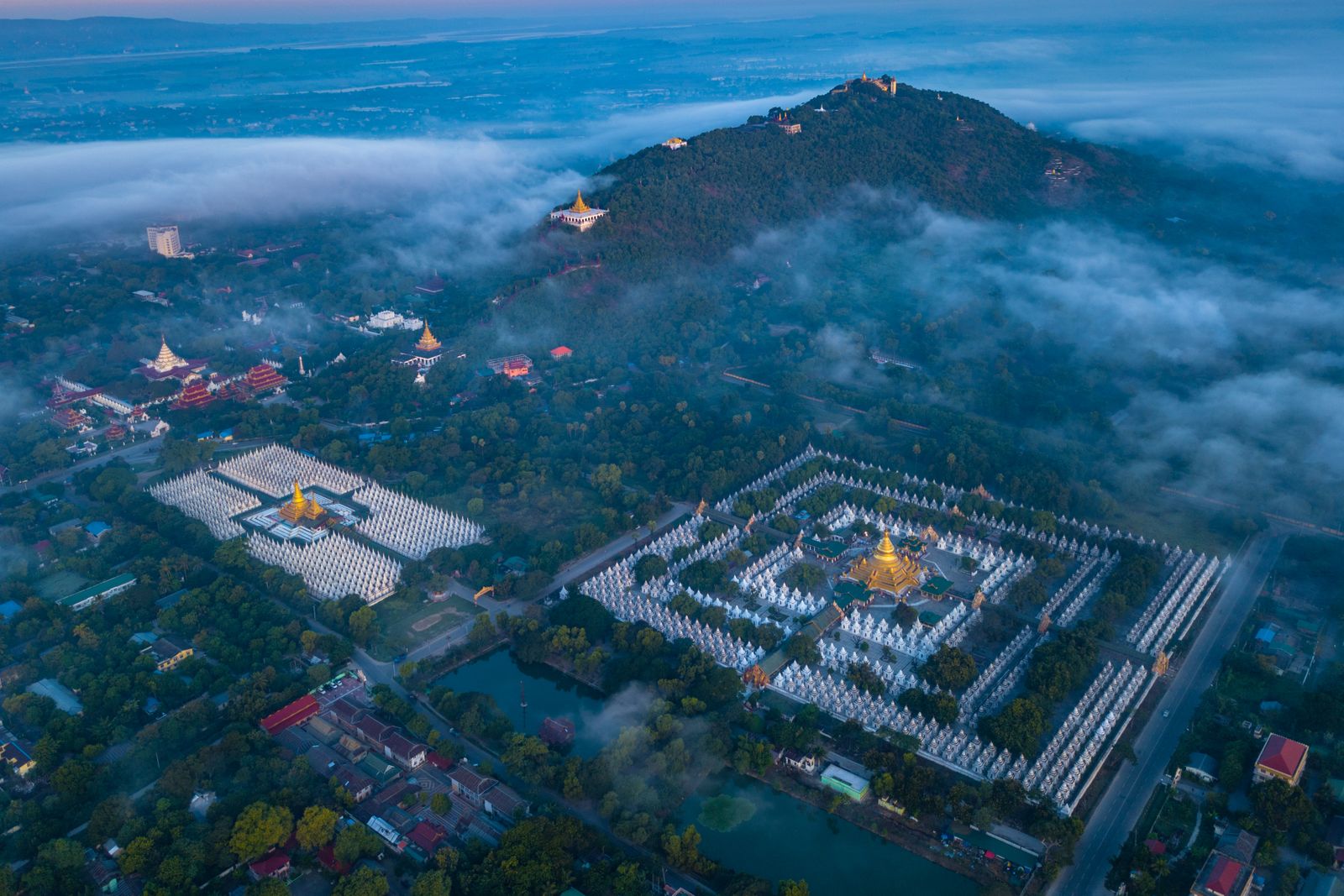
Photo: Tony Wu (Pexels)
Mandalay, Myanmar — not to be confused with Mandalay Bay in Las Vegas — is the real thing: a living, breathing city of roughly one million people in upper Burma, and the undisputed cultural capital of the country. The last royal seat of the Konbaung Dynasty before the British annexation of 1885, Mandalay retains a deep concentration of Buddhist scholarship, traditional craftsmanship, and historical architecture. For travellers exploring things to do in Myanmar, it is an essential stop and a natural complement to Bagan or Inle Lake.
Why Visit Mandalay
Mandalay rewards those who dig beneath the surface. The city itself is flat, dusty, and not especially photogenic at street level — but it is surrounded by sacred hills, ancient capitals, a teak-wood bridge that stretches into the mist, and workshops where gold leaf is still beaten by hand using techniques unchanged for centuries. It is a place where monastic life is intensely visible and where you can watch master craftspeople at work in open-fronted workshops.
Getting to Mandalay
By air: Mandalay International Airport receives domestic flights from Yangon (roughly one hour) and Heho/Inle Lake (around 40 minutes). Several domestic carriers operate these routes; book through your preferred platform or at the airport.
By train: The overnight train from Yangon to Mandalay is a classic Myanmar experience. Journey times vary but typically run overnight, arriving in the morning. Upper-class sleeper seats offer reasonable comfort.
By bus: Express bus services from Yangon take approximately eight to nine hours. Night buses are popular and allow you to save on a night’s accommodation.
Practical note: Always verify current transport options and road conditions, as schedules and availability can change. Check travel advisories from UK FCDO, US State Department, or France Diplomatie before finalising your plans.
Top Things to Do in Mandalay
Climb Mandalay Hill
Mandalay Hill rises 236 metres above the plain and is crowned with shrines, pavilions, and a stupa visible from much of the city. The climb via a covered staircase is a pilgrimage for Burmese Buddhists and a memorable experience for visitors. Shoes must be removed at the base; the covered walkway protects your feet on the way up. The views from the top over the royal palace, the Irrawaddy River, and the surrounding plains are best in the late afternoon.
There are also shrines at intervals during the climb, and vendors sell offerings and snacks at various levels. Plan at least an hour and a half for the ascent, time at the top, and descent.
Sunset at U Bein Bridge
U Bein Bridge near Amarapura is one of the most photographed scenes in Myanmar — a narrow teak walkway nearly 1.2 kilometres long that crosses Taungthaman Lake. Built in the mid-19th century from teak salvaged from the former Inwa palace, it is believed to be the world’s longest teak bridge, though its age means some sections have been reinforced or replaced over time.
The bridge is a working crossing used daily by monks, locals on bicycles, and schoolchildren. Arrive in the late afternoon to catch the sunset reflections on the water and the silhouettes of monks in their robes making their way across. Small boats can be hired to watch from the water — a different perspective from the bridge itself.
Mandalay Royal Palace
The royal palace complex sits within a large moated square in the centre of the city. The original 19th-century palace was largely destroyed during World War II, and much of what stands today is a reconstruction completed in the 1990s. While it lacks the authentic patina of truly old structures, the scale is impressive and the watchtower offers a wide view across the grounds and city.
Note that part of the palace grounds is still used by the military and access is restricted to the reconstruction area. Entry requires a combined heritage ticket that also covers other sites in the Mandalay zone.
Traditional Crafts Workshops
Mandalay is Myanmar’s craft capital. The streets around 35th and 36th Streets in particular are lined with workshops producing:
- Gold leaf — teams of men beat gold nuggets between sheets of leather for hours to produce wafer-thin sheets used to decorate Buddha images across the country
- Marble carving — workshops on the road toward Amarapura produce Buddha statues in all sizes from locally quarried white marble
- Woodcarving and lacquerware — intricate carved panels and lacquered boxes can be watched being made, and pieces can be purchased directly
- Silk weaving — the Amarapura area is home to weavers producing traditional htamein (sarong cloth) on wooden looms
Most workshops welcome visitors and there is no obligation to buy. This is one of the most authentic ways to spend a morning in the city.
Shwenandaw Monastery
This ornately carved teak monastery near the palace grounds is one of the few original 19th-century structures to survive in Mandalay. It was originally a part of the royal palace complex, used as a bedroom by King Mindon, and was later moved and converted into a monastery, which is what saved it from the wartime destruction that claimed most of the palace. The exterior carving is extraordinary — dense, precise, and covering almost every surface.
Day Trips from Mandalay
Mandalay makes an excellent base for exploring the former capitals clustered within a 40-kilometre radius. A standard day trip combines two or three of these:
| Destination | Distance | Highlight |
|---|---|---|
| Amarapura | ~11 km south | U Bein Bridge, silk weavers |
| Sagaing | ~21 km southwest | Hundreds of stupas on a ridge; active monastic community |
| Inwa (Ava) | ~19 km southwest | Horse carts around crumbling palace ruins; Bagaya Monastery |
| Mingun | ~11 km north (by boat only) | Massive unfinished stupa; cracked by earthquake |
Mingun is reached exclusively by boat along the Irrawaddy — the 45-minute journey itself is part of the pleasure. Boats depart from the riverfront near Mandalay in the morning.
Hiring a taxi or motorbike taxi for the day to cover Amarapura, Sagaing, and Inwa in a single circuit is the most flexible option. Agree on an itinerary and price before departing.
Mandalay and Bagan
Many travellers pair Mandalay with Bagan, the ancient temple plain roughly three hours to the south. The two destinations complement each other well: Mandalay for living culture and crafts, Bagan for landscape and historical spectacle. Internal flights, the slow boat down the Irrawaddy (a two-day journey), and express buses all connect the two.
Where to Stay in Mandalay
The city has a range of accommodation from basic guesthouses near the city centre to mid-range hotels in the vicinity of the palace. A smaller number of more comfortable properties sit nearer the Irrawaddy riverfront. For context on accommodation choices across Myanmar, see where to stay in Myanmar.
Book a Guided Tour
A local guide adds real depth to Mandalay — particularly for the craft workshops and former capitals, where context and conversation transform what you see.
Find Mandalay tours and day trips: Browse guided tours of Mandalay and its ancient capitals on Viator
Practical Notes
- Heritage ticket: A combined ticket covers the royal palace, Shwenandaw Monastery, and certain other sites in the Mandalay archaeological zone. Keep the ticket with you.
- Getting around the city: Motorbike taxis and trishaws are common for short distances. Taxis are available for day trips to the surrounding capitals.
- Best time: The cool dry season (November to February) is most comfortable. March to May can be extremely hot. The best time to visit Myanmar guide covers seasonal conditions in more detail.
- Safety: As with all travel in Myanmar, check current advisories from your government’s official source before and during your trip. Conditions can change.
FAQ
Is Mandalay worth visiting in Myanmar?
Yes — Mandalay is essential for anyone interested in Myanmar’s culture, Buddhism, and traditional crafts. It offers a very different experience from the temple plains of Bagan or the lake landscapes of Inle, and the surrounding former capitals add significant historical depth.
How do I get from Yangon to Mandalay?
The most common options are a domestic flight (roughly one hour), the overnight train (a classic, slower option), or an express bus (approximately eight to nine hours). All three are regularly used by travellers.
What is U Bein Bridge and why is it famous?
U Bein Bridge is a 19th-century teak walkway nearly 1.2 kilometres long crossing Taungthaman Lake near Amarapura, south of Mandalay. It is famous for its age, its length, and the atmospheric sunset views across the water, especially with monks and locals crossing at dusk.
Can I visit the Mandalay Royal Palace?
Yes — the reconstructed palace complex is open to visitors. Note that it is a modern reconstruction; most of the original 19th-century structures were destroyed in World War II. Part of the grounds remains a military zone and is not publicly accessible.
How many days do I need in Mandalay?
Two full days covers the main highlights — Mandalay Hill, the craft workshops, and Shwenandaw Monastery. Adding a third day allows for a comfortable day trip to Amarapura, Inwa, and Sagaing, and a sunrise boat to Mingun.